
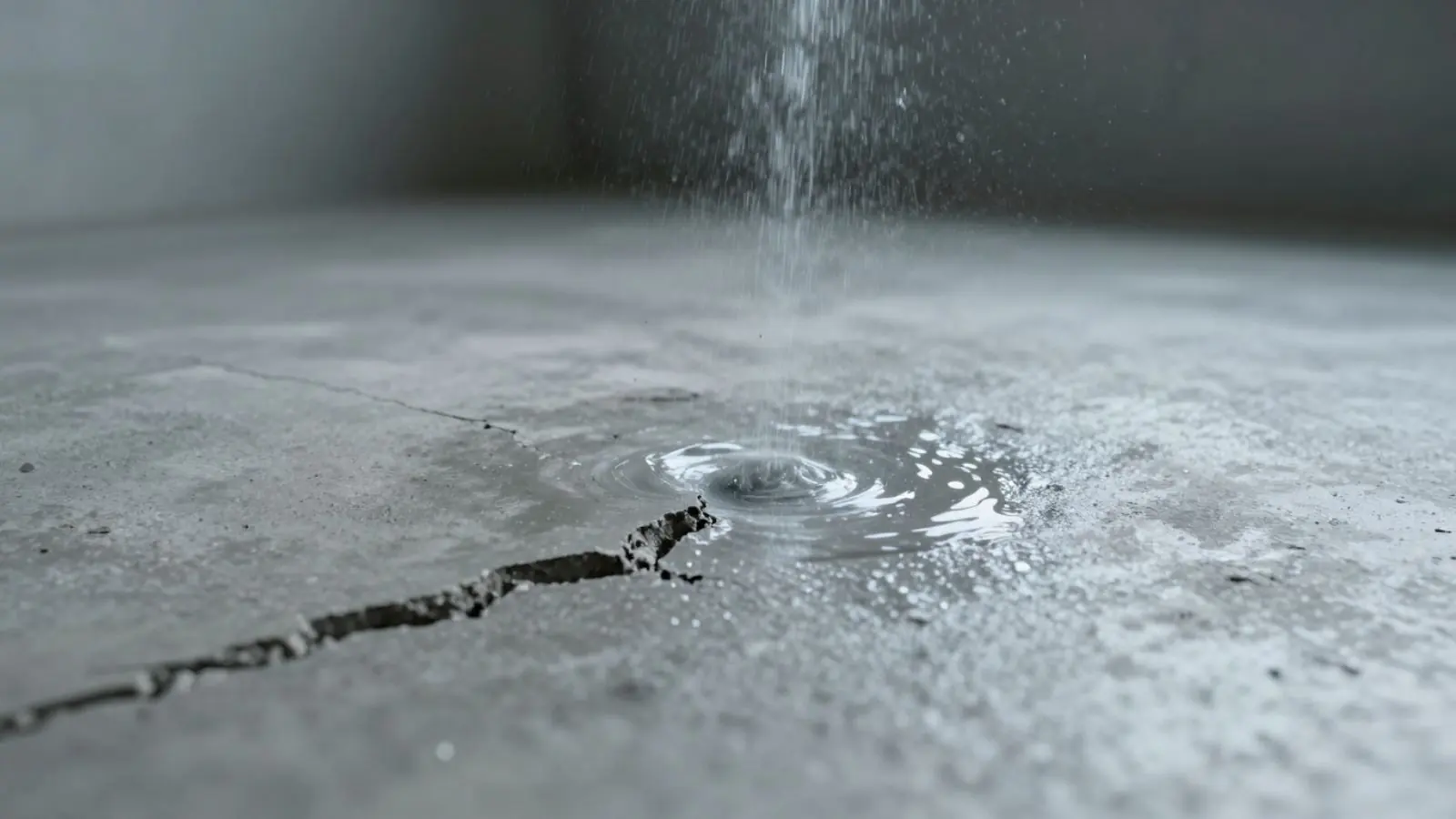
A slab leak is a leak in a water pipe that runs under or inside the concrete slab your house sits on. The water has nowhere obvious to go, so it rises through cracks and joints, or it spreads under flooring where you cannot see it. Our dispatch line is open 24/7 for slab leak water damage in Chatsworth, CA, and same-day response is offered when available.
Two jobs are involved, and they belong to different trades. A plumber finds the leak, stops it and reroutes or repairs the pipe. A restoration crew dries the floors and walls, removes ruined flooring and treats the slab surface so the damage stops growing.
What a slab leak is and why it stays hidden
Many homes in the San Fernando Valley sit on a concrete slab, with hot and cold water lines running beneath it or through it. Pinholes can form where a pipe rubs against gravel, rebar or another line. Ask a plumber whether your home is slab-on-grade, because the answer decides whether this page applies to you at all.
A small leak can run for weeks before anything shows on the surface. The concrete holds water like a sponge, and flooring laid on top traps it against the underside. By the time you notice, the wet area is usually bigger than the stain.
Signs you see and what they mean
Slab leaks give a handful of clues. None of them proves a leak alone, but two or three together are a strong reason to call a plumber.
- A warm spot on the floor, which can mean a hot water line is leaking below
- Your water meter keeps moving after every fixture in the house is off
- A water bill that climbs with no change in how you use water
- Damp or lifting carpet, cupped wood planks or tiles popping loose
- A hissing or running sound when the house is quiet
- Baseboards that stain, swell or grow a musty smell
Emergency Slab Leak Water Damage in Chatsworth? Call the 24/7 line.
☎ (818) 337-2642Slab leak safety: the first hour
Start at the main shutoff valve, which sits by the meter or on the street side of the house, and turn it closed. If the valve will not turn, call LADWP, the water utility. Keep everyone off wet floors, especially if water is reaching outlets, appliances or the electrical panel.
- Shut off the main water valve and open one faucet to relieve pressure.
- Switch off breakers for the soaked rooms, but only when you can reach a dry panel without stepping through water. Water pooling around the panel means you stay away from it. Sparks, buzzing or a gas odor are emergencies for 911 or the utility, ahead of any restoration call.
- A rotten-egg smell from a broken line under the floor means everyone walks outside first, and the gas company or 911 gets the first call.
- Call a licensed plumber to locate the leak, then call the restoration line to start drying.
- Photograph the wet areas and the water meter reading before anything is moved.
A warm floor can also be a heating or electrical problem. If a floor is hot, or you see sparks or smell burning, leave and call 911. Do not touch wet cords or switches.
Who does what: plumber first, then drying
Leak detection uses listening gear, pressure tests and sometimes thermal imaging, and it is a plumber's work. Repair can mean cutting into the slab, or rerouting the line through walls or the attic so the old pipe is abandoned. We do not do plumbing, and a crew that tries to dry a floor with the leak still running is wasting its time.
Once the water is off, water mitigation begins. If the plumber needs to open the slab, tell us before the demolition so we can plan the dust control and drying around it.
How we dry a floor that sits on a slab
Water sits in three places after a slab leak: in the flooring, in the bottom of the walls, and in the concrete itself. Each needs its own approach, and concrete dries slowest.
The first pass uses moisture meters and a thermal imaging camera, which show how far the water has crept beneath the floor. Wet carpet pad, laminate and glued-down materials are usually pulled up, because they trap moisture against the slab and grow mold when left.
- Map moisture in flooring, baseboards and the lower wall with meters and a thermal imaging camera.
- Extract any standing water with extraction units.
- Remove flooring and pad that cannot dry, and cut back wet drywall at the base of the wall.
- Set air movers across the slab and LGR dehumidifiers in the room to pull vapor out of the air.
- Apply antimicrobial treatment where materials stayed wet, then take daily readings until the slab and framing match a dry reference.
What changes the cost
The size of the wet area matters most, followed by the flooring type. Tile over a slab can often stay if the water is caught fast, while glued wood or carpet usually cannot. Other factors include how long the leak ran, whether the water was clean supply water, how many walls need opening, and how long the slab needs to dry. A plumber's repair is a separate bill from drying, and rebuilding afterward falls under water damage repair.
Insurance fit: sudden or gradual
Policies often treat a sudden and accidental pipe break differently from a leak that ran slowly for months. Gradual leaks and neglect are often excluded, and some policies limit or exclude the cost of reaching the pipe itself. Slab leaks have their own policy quirks, so read your coverage and put the question to your insurer ahead of any demolition.
Photograph everything, keep receipts for emergency steps and keep any damaged material until the adjuster says it can go. Flood coverage is a separate policy and does not apply to a plumbing leak.
Mistakes to avoid
The common errors are easy to prevent. Covering a damp floor with a rug, or running a fan on it for a day and calling it done, leaves moisture in the slab and the walls.
- Waiting to see whether the bill drops next month
- Laying new flooring over a slab that has not been tested dry
- Skipping the plumber and drying a floor that is still being fed
- Throwing out damaged material before photographing it
Chatsworth notes for slab leak repairs
Water service here comes from LADWP. If your meter keeps running with every fixture off, the utility is the right place to confirm where your shutoff is, and it gives the plumber a starting point.
Repiping or rerouting lines under a slab can trigger a permit, since LADBS expects projects to meet local building codes. Your plumber should tell you who applies for it. The application itself goes through PermitLA or ePlanLA using an Angeleno account.
State insurance guidance tells homeowners to protect the property with temporary repairs and save every receipt. It also warns that ensuing damage may go uncovered if you skipped reasonable steps to secure the home. For a slab leak, those steps are closing the valve and getting drying equipment running quickly. Neighbors in Northridge and West Hills face the same questions, and our crews also work in Canoga Park.
Frequently asked questions
Can I get urgent help for a leaking slab at my Chatsworth house?
Yes. Our dispatch line runs 24/7, so you can call at night, on weekends and on holidays when water is coming up through the floor. Same-day response is offered when available. Shut off the main water valve first, keep out of rooms where water reaches outlets, and call a plumber to find the leak. Once the water is stopped, crews can start extraction and drying.
How do I know if I have a slab leak or just a wet floor?
Turn off every fixture and appliance, then watch your water meter. If the dial or digital reading keeps moving, water is escaping somewhere. A warm patch on the floor, a hissing sound, or damp flooring in the same spot each day all point to a leak under the slab. A plumber can confirm it with pressure tests and listening equipment.
Can you fix the pipe under the slab?
No. Finding the leak and repairing or rerouting the pipe is plumbing work done by a licensed plumber. Our crews handle what the water did to the home: extraction, flooring removal, drying the walls and slab, and antimicrobial treatment. Coordinating the two trades early saves time, since the plumber may need to open the floor.
How long does a slab take to dry?
There is no fixed number. Concrete releases moisture slowly, and the answer depends on how long the leak ran, the slab thickness and the conditions in the house. Technicians measure on every visit, and the equipment stays until slab, baseboards and wall framing read as dry as an unaffected part of the house. The published S500 standard from ANSI and IICRC covers this work, so ask whoever you hire if their crews follow it.
Do I have to remove my flooring after a slab leak?
Not always. Tile, and certain sealed surfaces, may stay put and dry in place if the water was clean and nobody waited long. Carpet pad, laminate, glued vinyl and engineered wood usually come up, because they trap water against the concrete. A technician checks each material with a moisture meter before deciding, and shows you the readings.
Will mold grow after a slab leak?
Mold needs moisture, so a slab that stays damp under flooring is a risk. Drying quickly and removing materials that cannot dry limits the chance. A pipe that dripped for weeks unnoticed may already have fed mold under the flooring. Tell your insurer and ask about professional testing. The S520 standard from ANSI and IICRC guides mold testing and cleanup, and our mold remediation page walks through each stage.
Does insurance cover slab leak damage?
Coverage turns on the wording of your policy and on how the leak began. A pipe that bursts without warning is often covered. A seep that went on for months, or a repair put off, often is not. Some policies treat the cost of reaching the pipe separately. Read the policy, call the insurer, and take photos of every wet surface before crews tear anything out.
Water on the floor right now? Call the 24/7 line.
☎ (818) 337-2642