
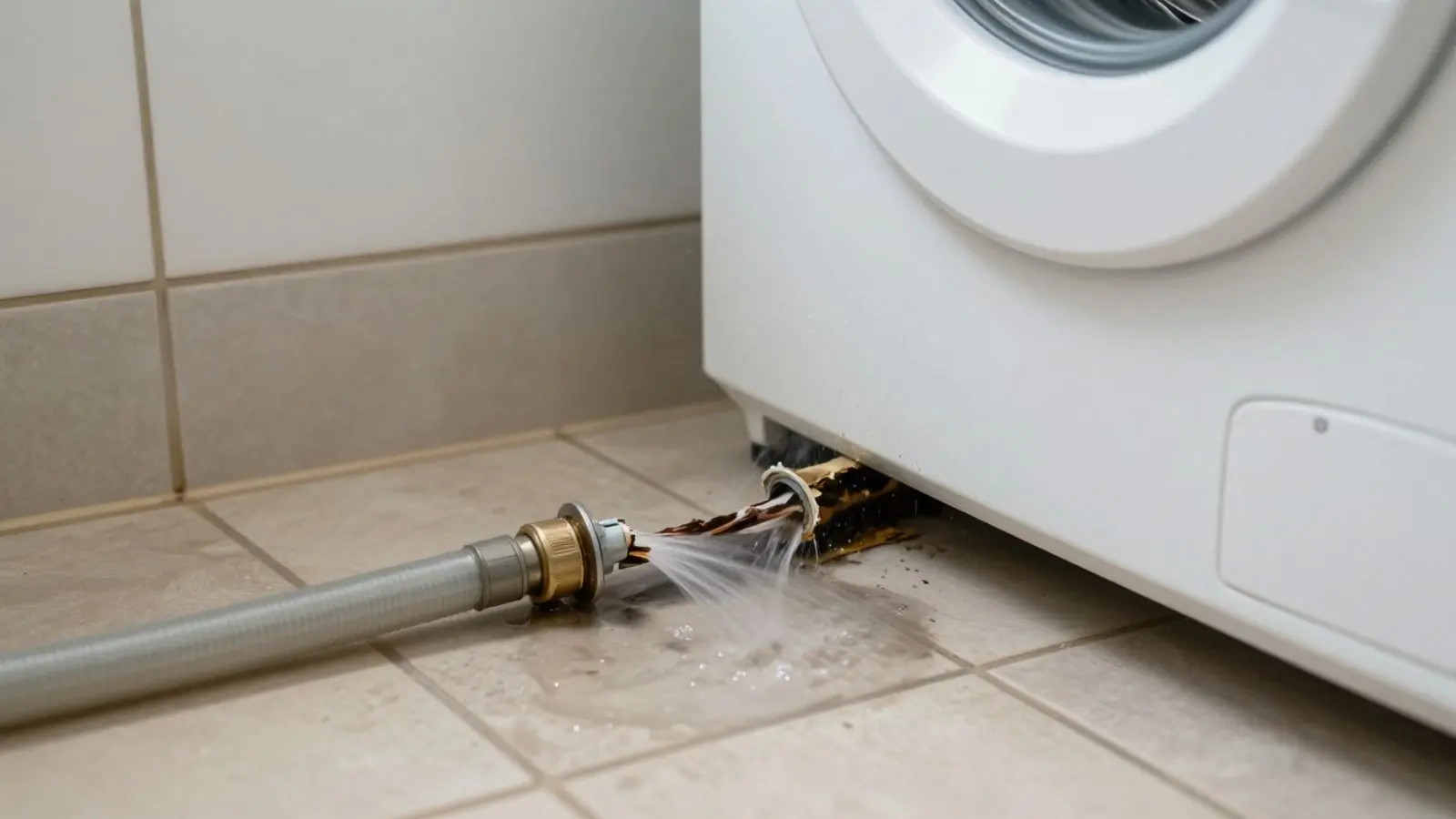
A washing machine hose lets go, a dishwasher drain loosens, or an ice-maker line weeps behind the refrigerator for months. Appliance leak water damage in Chatsworth, CA is usually hidden first and obvious later. Phones are staffed at every hour, and the goal is same-day response when available.
This page is about the appliance as the source. If the leak has soaked cabinets, subfloor and walls across a whole kitchen, our kitchen water damage page covers the room-level work. A dryer vent is not a water source, so this page leaves it out. If water has spread widely, head to emergency water removal next.
Which appliances cause water damage
Washers are the most dramatic, because a burst supply hose can run at full household pressure. Dishwashers leak at the door seal, the drain hose or the inlet valve. Refrigerators with ice makers leak from a small plastic or braided line that often sits out of sight.
- Washing machine supply hoses, drain hoses and drain standpipes
- Dishwasher door gaskets, inlet valves and drain connections
- Refrigerator water and ice-maker lines
- Water softeners and under-sink filter systems
- Condensate pans in some stand-alone units
Symptoms and what they mean
A floor that feels spongy near the appliance is often the first sign. Tile with loose grout, vinyl that lifts at the seams, and wood that cups all point to water below the surface.
A musty smell when you open the cabinet next to the dishwasher usually means the leak has run for a while. Dark staining on the underside of a cabinet floor means the same. These are signs to get a moisture reading, not to wait and see.
Appliance Leak Water Damage in Chatsworth? Call the 24/7 line.
☎ (818) 337-2642Appliance leak safety in the first hour
Unplug nothing while standing in water. Close the supply valve for the appliance, which is usually behind or beside it, or close the main water valve if you cannot reach it. Lift items off the wet floor and keep children and pets out.
Electricity and water do not mix. If the breaker panel is dry and reachable, shut off the circuits serving the wet room. A spark, a buzzing outlet or a gas smell is a reason to ring 911 or the utility before you phone for restoration. Gas ranges and dryers share this concern, so if you smell gas, leave the home.
If the appliance is plugged in and water is pooled around the outlet, do not touch the cord. Throw the breaker only from a dry panel. Otherwise, hand the problem to 911 or the utility.
Our process for appliance leaks
We start with extraction units that pull water from flooring and the base of cabinets. After that, a moisture meter and thermal imaging camera trace where the water went beneath the machine and into the wall cavities flanking it.
Fans called air movers sweep wet surfaces dry, while LGR dehumidifiers collect the vapor they lift into the room air. Where water is trapped under a cabinet or behind a baseboard, small openings let air reach it. We recheck readings each visit and keep drying until materials match a dry reference. Ask any restoration company whether its crews follow ANSI/IICRC S500, a published reference standard for jobs like this.
- Stop the water at the appliance valve
- Extract standing water
- Find hidden moisture with meters and thermal imaging
- Remove materials that cannot be dried
- Set air movers and LGR dehumidifiers
- Log readings until the area is dry
What changes the cost
Cost follows scope. A short, fast leak on a hard floor is not the same job as a slow leak that rotted a cabinet base. Flooring type, the number of rooms touched and whether subfloor has to be cut out all change the work.
Drying time and equipment count matter too. We give the scope after readings are taken, so you know what you are agreeing to.
Does insurance cover an appliance leak?
A hose that bursts without warning is the kind of abrupt loss many policies address. A leak that went on for a long time is often treated differently, and neglect is commonly excluded. Ask your insurer how it treats your situation, and check your policy for wording on wear and tear.
A plumbing or appliance failure is not a flood in insurance terms, and flood damage usually needs its own policy. The appliance itself is typically a separate question from the water damage it caused.
Mistakes to avoid and prevention
Do not mop and move on. Surface water is only the part you can see, and wet insulation or subfloor can hold moisture for weeks. Do not run the appliance again until the leak is found.
For prevention, replace old rubber hoses with braided ones, look behind the refrigerator and under the sink a few times a year, and know where each shutoff valve is. A water alarm on the floor costs little and can catch a slow leak early.
Chatsworth notes for appliance leaks
Winnetka, just south of Chatsworth, had renters in 42% of housing in the 2010 Census, according to published census data. If you rent in Winnetka or elsewhere, tell your landlord or property manager about the leak right away and photograph it. Our Winnetka page and Canoga Park page explain how we work in that neighborhood.
A California Department of Insurance guide asks you to photograph what got wet, note the brand and model of each item, and keep damaged goods until the adjuster clears you to discard them. Keep the failed hose or valve in a bag and write down the appliance model before anything leaves the house.
That guide adds that any denial has to arrive in writing and spell out its reasons. If your insurer denies a claim, ask for that letter and keep it with your records.
Frequently asked questions
Is emergency appliance leak cleanup available in Chatsworth, CA?
Yes. Our dispatch line runs 24/7, so a washer hose that fails at night or on a holiday can be reported right away. Tell us what leaked and where the water went. Same-day response is what we work toward when available, but no arrival time is promised, because call volume and where crews are working set the schedule.
A washing machine hose burst. What should I do first?
Close the washer valves or the main water valve, then lift belongings off the floor. Switch off the room's circuits from the panel, but only when that panel is dry and reachable without risk. For any electrical hazard, ring 911 or the utility first. Take photos, then call us so extraction and drying can begin before water spreads into walls and subfloor.
How do I know if my dishwasher is leaking under the floor?
Look for a soft or warped floor near the dishwasher, a musty smell in the adjacent cabinet, or staining under the sink. Meter and camera readings can reveal concealed water before anyone cuts into a wall or lifts a floor. If readings are high, drying usually starts with limited openings in the toe-kick or cabinet base.
Can a refrigerator ice-maker line cause serious damage?
Yes. The line is small, but a loose fitting can drip behind the fridge for months. Water follows the floor and soaks into the subfloor and the cabinets next to it. When the refrigerator is pulled out, mold and swollen flooring are sometimes found. Suspect a slow, months-long leak? Mold testing belongs with a qualified professional.
Will my homeowners insurance cover appliance water damage?
We cannot decide that, and we do not bill insurers on your behalf. Many policies cover sudden and accidental water damage, while slow leaks and neglect are often excluded. Check your policy and ask your insurer. Keep photos, receipts and notes on every call.
Should I repair the appliance myself before drying?
Stop the leak, but do not try to restore the area on your own. A fixed hose does not dry the floor beneath it. Have a plumber or appliance technician handle the repair, and let a restoration crew check moisture in the floor and walls so a hidden problem does not stay behind.
Water on the floor right now? Call the 24/7 line.
☎ (818) 337-2642