
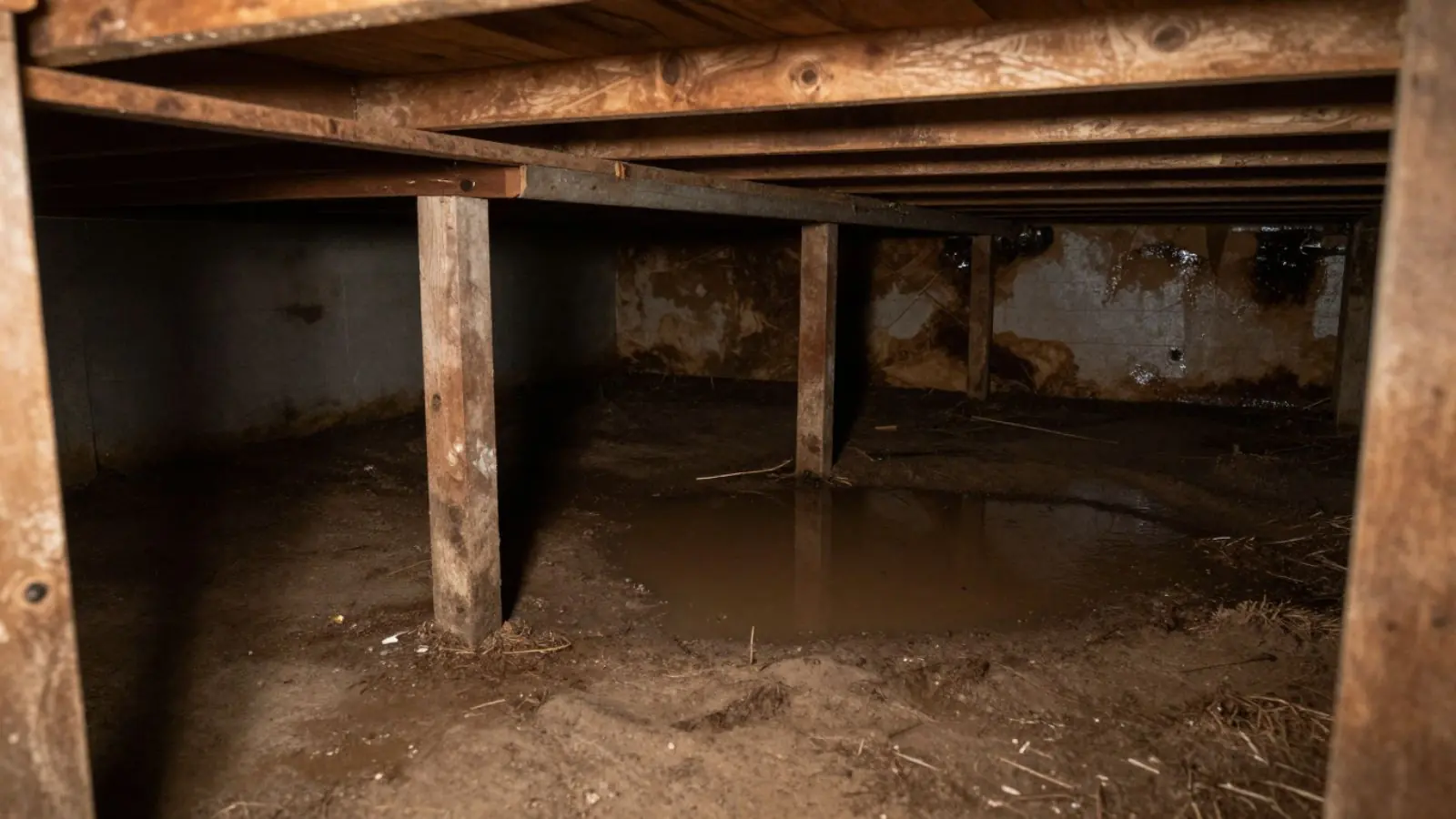
Crawl space water damage happens when water collects in the low space between the ground and the floor of a raised-foundation home. Be clear about one thing first. Crawl spaces exist mainly under older raised-foundation houses, and many other homes in the area sit on concrete slabs. If yours is a slab home, see our page on slab leak water damage instead.
If you do have a crawl space and water is down there, call the 24/7 dispatch line for emergency crawl space water damage in Chatsworth, CA. Same-day response is offered when available.
How water gets under a raised-foundation home
There are two main routes. Rain can enter through foundation vents, low spots in the soil or poor drainage along the walls. Or a plumbing line, drain or water heater above the crawl space can leak and drip down into it.
Because the space is closed off, the water stays for a long time. Soil, wood framing and insulation hold moisture, and nobody looks at them until a floor feels odd.
What you notice upstairs and what it means
The first clues are usually inside the house, not under it. Floors that bounce, bow or feel cold often have damp framing below them.
- Hardwood that cups, gaps or lifts along one wall
- A musty or earthy smell that rises from floor vents or closets
- Soft spots near an exterior wall or under a bathroom
- Sagging insulation or drips visible through a crawl space access hatch
- Rising humidity in the house even in dry weather
Emergency Crawl Space Water Damage in Chatsworth? Call the 24/7 line.
☎ (818) 337-2642Crawl space safety before you open the hatch
A crawl space is a confined space with low clearance, loose wiring and wet soil. Do not go in if water is standing near wires, junction boxes or a water heater. Ask a professional to enter instead of trying it yourself.
- Shut off the main water valve if a pipe may be the source.
- Flip off breakers feeding the area above the crawl space, but only from a dry panel you can reach without wading. Wires near standing water under the house, or any gas smell, belong to 911 or the utility, so make that call ahead of ours.
- Keep children and pets away from the access hatch and from wet floors above.
- Do not enter a flooded crawl space, and never enter if you smell gas or see sparks.
- Photograph the hatch area and any visible water from the doorway, then call.
If the water may be sewage, treat it as contaminated. Stay out, keep others out and tell the dispatcher what you saw.
How we handle a wet crawl space
Crews enter with protective gear and lighting, check for electrical hazards, and record what they find. Then comes extraction, drying and cleanup, in that order.
- Pump out standing water with extraction units and remove debris that holds moisture.
- Check the vapor barrier, the plastic sheeting over the soil, and note where it has torn or shifted.
- Measure joists, subfloor and sill plates with moisture meters, and scan walls and floors with a thermal imaging camera.
- Take out wet insulation, since it holds water against the wood above.
- Set air movers and LGR dehumidifiers to dry the framing, using ducted air so it reaches the closed space.
- Apply antimicrobial treatment where needed and recheck readings until the wood is dry.
Subfloor and joist drying
Joists and sill plates often dry without removal if the water came from a clean source and sat briefly. Long exposure can lead to swollen subfloor boards and mold growth on the underside of the floor. A technician reads the moisture in each joist and compares it to a dry reference, and only then calls the framing dry.
Published industry guidance, the S500 from ANSI and IICRC, sets the practice for drying under a house. Any company you consider should be able to say whether its crews follow it. Whatever the answer, ask to see the readings.
What changes the cost
Access is the biggest variable. A tight hatch and low clearance slow every step. The amount of water, how long it sat, whether the soil is soaked and how much insulation must be removed also matter. Others include the number of joists affected, whether the water was clean or contaminated, and how long the drying takes. Fixing the drainage or the plumbing leak is a separate trade.
Insurance fit and prevention
Sudden and accidental water from a burst pipe is often covered. Gradual seepage is often excluded, and surface or rising water is usually flood, which needs a separate flood policy. Look at your policy language and talk to the insurer ahead of the first day of work.
To prevent repeat problems, keep vents clear, make sure gutters and grading push rain away from the foundation, and ask a pro to inspect the vapor barrier once a year before the rainy months. For storm intrusion, see our flood damage restoration page.
Chatsworth notes for crawl space problems
Chatsworth gets its rain between November and March, then dries out for the summer. That pattern means a crawl space can stay damp for months after the first storms. Walk the perimeter in October, clear debris from vents and check that downspouts empty away from the house.
Hills ring the community, with the Santa Susana Mountains north and the Simi Hills on the west and north sides. Plenty of lots slope, and storm runoff can head straight for a foundation wall. Look at where water flows on your lot during a storm, and ask the city before you change grading or drainage.
California insurance regulators advise drying wet spots quickly using moving air and dehumidifiers, which keeps mold less likely. A seep that lingered under the floor for weeks could already have mold, so tell the adjuster and line up a professional test. Homes in Northridge and Porter Ranch face similar questions, and water mitigation covers the broader first steps.
Frequently asked questions
Is emergency crawl space water damage cleanup available in Chatsworth, CA?
Yes. Dispatchers answer around the clock, holidays and late nights included. Same-day response is offered when available. Tell the dispatcher whether you can see standing water, whether a pipe is still leaking and whether wiring is near the water. Shut off the main water valve if a pipe may be the cause, and stay out of the crawl space until a crew arrives.
Does my Chatsworth home even have a crawl space?
Many older homes use a raised foundation with a crawl space, while many others sit on a concrete slab. Look for small vents along the foundation wall, a square access hatch in a closet or hallway floor, or a short exterior access door. If you are unsure, ask a plumber or a home inspector, and check your permit paperwork.
Is it safe to go into a wet crawl space myself?
It is best not to. The space is cramped, dark and often has wiring, pipes and loose soil. Wet conditions add shock and slip risks, and the air can be poor. Take photos from the hatch and let a trained crew enter with lighting and protective gear. If you smell gas or see sparks, leave and call 911 or the utility.
Can wet joists and subfloor be dried instead of replaced?
Frequently, provided the water started clean and did not linger. Crews use moisture meters to check each joist and subfloor board, then dry them with air movers and dehumidifiers. Wood that is rotted, badly swollen or covered in heavy mold growth may need to be replaced. Readings, not appearance, decide.
What about the vapor barrier and insulation?
A vapor barrier is plastic sheeting over the soil that slows moisture rising into the space. If it has torn or shifted, it should be checked and repaired once the area is dry. Wet insulation usually comes out because it holds water against the wood. New insulation goes in after the framing reads dry.
Will mold develop under the house?
Mold needs moisture, and a damp crawl space supplies it. Prompt drying and removing wet insulation reduce the risk. If you see or smell growth, do not disturb it. Testing and removal by professionals follows the S520 standard from ANSI and IICRC. Details are on our mold remediation page. Questions about health belong to a physician.
Does insurance cover crawl space water damage?
It depends on the cause. A sudden pipe break is often covered, while slow seepage and neglect often are not. Rain or surface water rising into the space is usually flood, which needs a separate flood policy. Check your policy, ask your insurer, keep receipts for emergency steps and photograph the damage.
Water on the floor right now? Call the 24/7 line.
☎ (818) 337-2642