
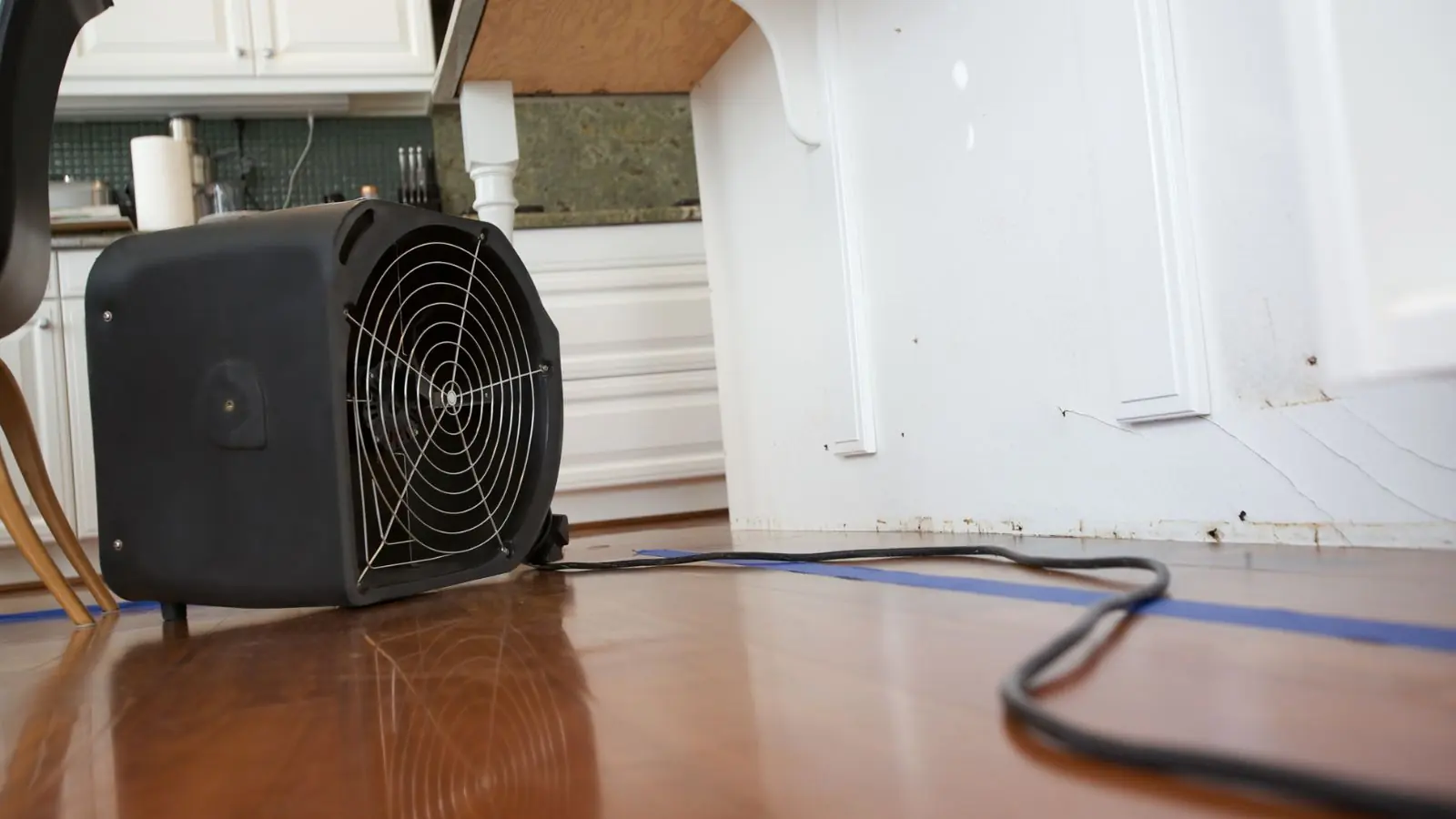
The kitchen is the wettest room in most houses, and it hides water well. Cabinets, toe-kicks and appliances sit on top of the floor, so a leak can run for days before you see it. If your Chatsworth, CA kitchen is wet, dispatch picks up 24/7 for restoration, and same-day response is offered when available.
This page is about the room as a whole: what gets wet, what comes out first, and how the drying works. If the problem is one appliance, such as a washer or ice-maker line, the appliance leak water damage page covers that cause in more detail.
Where kitchen water comes from
The usual sources are the sink drain and supply lines, the dishwasher hose and pan, a refrigerator water line, and pipes inside the wall behind the sink. Slow drips under the sink are the most common sneaky ones, since the cabinet floor soaks and swells before anyone looks.
Older homes in tract neighborhoods may have original shutoff valves and supply lines that have not been touched in decades. A valve that cannot be turned is a warning sign.
Symptoms and what they mean
Kitchen damage shows up in specific ways. Match what you see to the likely cause.
- Swollen or peeling cabinet floors point to a slow leak under the sink.
- Warped hardwood or cupped planks near the dishwasher suggest water under the floor.
- Loose or hollow-sounding tile means the underlayment may be wet.
- Staining on the wall behind the backsplash suggests a leak in the wall.
- A musty smell inside a closed cabinet means material has been damp for some time.
Kitchen Water Damage Restoration in Chatsworth? Call the 24/7 line.
☎ (818) 337-2642Kitchen safety in the first hour
Kitchens mix water with outlets, appliances and often gas. Turn off the water at the fixture valve or the main. Flip the breakers only when the panel is dry and reachable, and never handle a plugged-in appliance that sits in a puddle. A gas smell means leaving the house at once and ringing the gas company or 911, with the restoration call coming afterward.
Empty the lower cabinets, lift rugs and move food and small items. Keep the refrigerator closed if water is near its base.
Never reach for an outlet, range or dishwasher while standing in water. Phone 911 or the utility whenever electricity or gas may be involved.
What gets removed first and why
Crews start with what holds water and cannot dry well. That usually means wet cabinet toe-kicks, the bottom of drywall, and any laminate, vinyl or engineered flooring with a swollen core. Solid wood and tile can often be dried in place, but cabinets set on a wet subfloor may need to be detached and pulled forward.
Countertops are generally left alone unless the cabinet base fails. Taking out too little leaves hidden moisture. Taking out too much adds cost, so readings guide each decision.
Our drying process
Dry air has to reach the wet layers, not just the surface. Closed cabinets trap moisture, so openings are often cut in a toe-kick or the back panel.
- Find the leak, close it off and secure the room.
- Extract standing water, using extraction units on tile and vinyl.
- Moisture meters and a thermal imaging camera check the walls behind the backsplash and the cabinet boxes below the counter.
- Remove ruined material and open toe-kicks or the cabinet base to expose wet framing.
- Set air movers and LGR dehumidifiers, with a drying system for the cavity under cabinets when needed.
- Recheck readings at each visit and remove equipment only when materials read dry.
What changes the cost
Costs depend on the job. Nothing here is a quote, and any estimate follows an inspection.
- Flooring type: tile, vinyl, laminate or hardwood
- Whether cabinets can stay in place or must be removed
- How far water traveled beyond the kitchen
- Clean supply water versus a dirty drain backup
- Days of drying equipment
- Rebuild scope afterward, including permits for any structural work
Insurance fit and mistakes to avoid
A sudden supply line or hose failure is often covered, while a leak that ran slowly over time often is not. Read your policy, then ask your insurer how it handles this kind of cause. Photograph the damage, list damaged items with brand and model, and keep receipts for emergency steps.
Do not tear out cabinets before the photos are taken. Do not use heaters to speed up drying, since drying needs controlled airflow and dehumidification. The industry's written reference for water restoration is ANSI/IICRC S500, and a reputable contractor can tell you whether its crews work from it.
Kitchens, renters and permits in Chatsworth and nearby
The state insurance department's claims guide tells owners to patch things temporarily, save receipts and hold off discarding damaged goods until the adjuster gives the go-ahead. In a kitchen, that means keeping the swollen cabinet door and flooring sample until cleared. Photograph them first.
In nearby Winnetka, renters held 42% of housing in the 2010 Census. If you rent, tell your landlord or property manager right away, since cabinets and plumbing are usually theirs while your belongings are yours. Postwar tract homes in Northridge often have older kitchens with original plumbing worth checking.
Rebuilding cabinets or walls may need a permit. LADBS requires rebuilds to meet local code, and its permit applications go in through PermitLA or ePlanLA. Ask your contractor whether your kitchen rebuild needs one.
Frequently asked questions
Is emergency kitchen water damage cleanup available in Chatsworth, CA?
Yes. The dispatch line runs 24/7. Same-day response when available. Call, say where the water is coming from, and shut off the fixture valve or main if you can. Move food, small appliances and rugs out of the wet area, take photos, and do not use a regular vacuum on standing water.
Do my kitchen cabinets have to be replaced?
Not always. Cabinets built from solid wood or plywood may dry successfully after a short exposure to clean water. Particleboard cabinet bases swell and rarely recover. A moisture meter reading and a look at the cabinet floor and toe-kick usually settle it. Your insurer may have its own view, so ask before anything is discarded.
Can hardwood or tile be saved after a kitchen leak?
Often yes, if drying starts quickly. Tile itself is not harmed by water, but the layers beneath may be wet. Hardwood can cup or buckle, and specialty drying mats pull moisture from the boards. See the water damage repair page for what follows if material has to be replaced.
How is this different from an appliance leak?
An appliance leak page focuses on the cause, like a hose or a door seal. Kitchen damage looks at the whole room: cabinets, subfloor, walls and flooring. Many jobs involve both, since a dishwasher leak can soak the cabinet base and the floor. The same crew handles both parts.
How long does it take to dry a kitchen?
There is no set number. Equipment stays until the meter readings hit the dry baseline, which depends on the materials, the amount of water and whether air can get to each wet layer. Cabinets and subfloor under them are often the slowest. Each visit includes fresh readings, and the machines leave only once those readings say dry.
Is it safe to stay in the house while equipment runs?
In most cases yes, provided the water came from a clean source and nothing is contaminated. Air movers and dehumidifiers are loud and run around the clock, so expect noise. Keep children and pets away from cords and hoses. A dirty drain backup is different, and the area should be avoided until cleaned.
Could mold grow in my cabinets after a leak?
Mold needs moisture, so damp cabinet interiors and wall cavities can support growth if they stay wet. Getting the cabinets and walls dry quickly cuts the odds, yet nobody can assure it will stay away for good. Visible growth or a musty odor calls for testing and cleanup that follow ANSI/IICRC S520. Health questions belong to a physician. See our mold remediation page.
Water on the floor right now? Call the 24/7 line.
☎ (818) 337-2642